


.jpg)
In our parents’ era, skincare was all about natural remedies—neem, aloe vera, charcoal, and other simple ingredients. These traditional methods worked so well like todays acne face wash (as reported in the study). Hence, charcoal and neem became widely trusted over time.
Today, charcoal and neem are still widely loved, showing that some traditional skincare secrets never truly fade.
Both offer significant benefits in a face wash, but the best choice for pimples, acne, or dark spots ultimately depends on your skin type and overall needs. We’ll break down the differences to help you decide which one is right for you.
Charcoal Face Wash: What is it? How does it work?
A charcoal face wash is a cleanser formulated with activated charcoal. This activated charcoal is a generally highly porous ingredient known for its ability to draw out impurities.
Just like a magnet attracts metal, activated charcoal draws in dirt, oil, and toxins from deep within the pores. This is highly effective for cleansing.
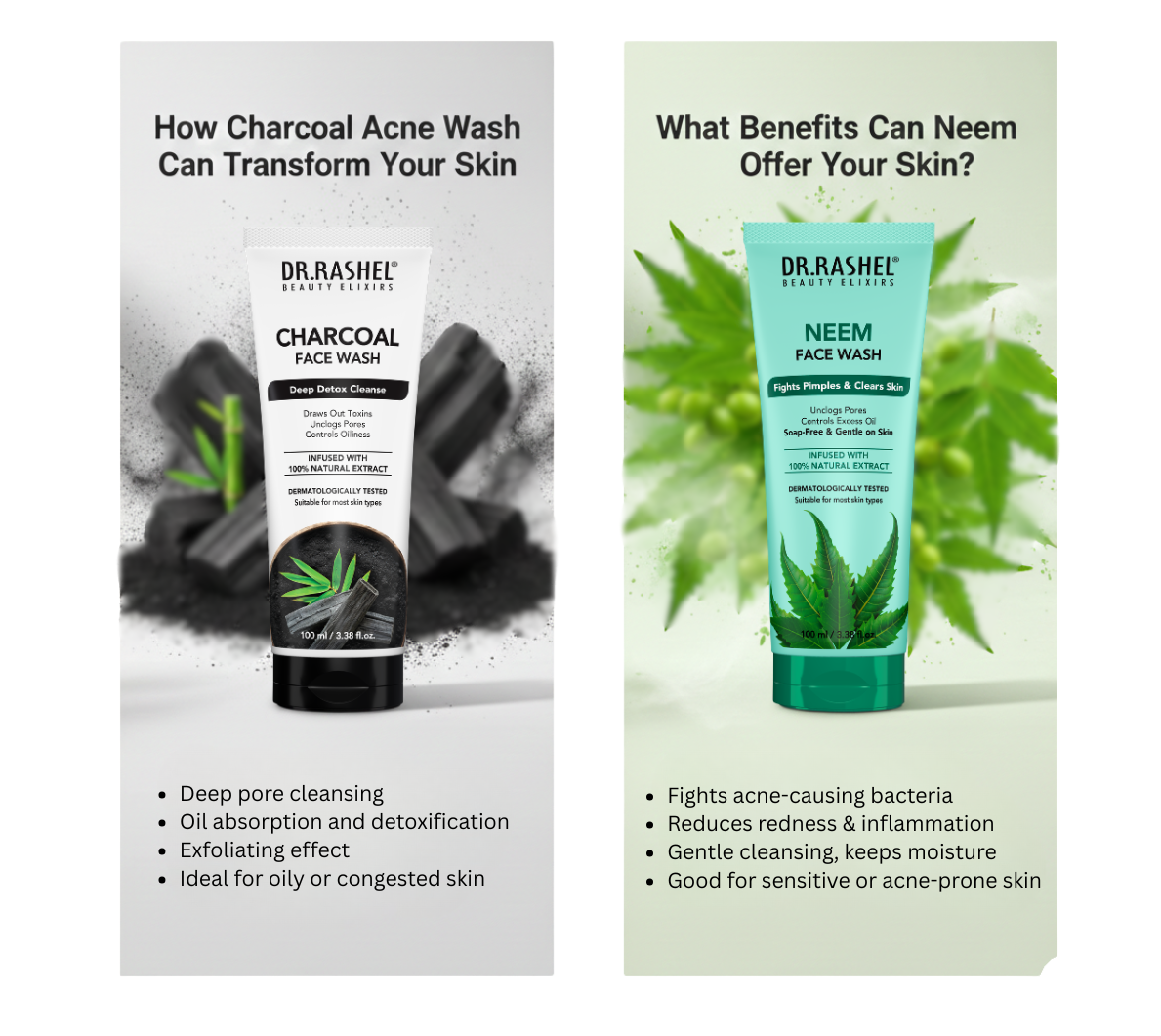
How Charcoal Acne Face Wash Can Transform Your Skin
People with oily skin are turning to charcoal face wash more than ever, enjoying its impressive results and multiple skin benefits. Here are the benefits of charcoal face wash:
- Deep pore cleansing: Activated charcoal removes stubborn impurities and pollution particles.
- Oil absorption and detoxification: Charcoal helps reduce greasiness.
- Exfoliating effect: Its gritty texture offers mild physical exfoliation.
- Ideal for oily or congested skin: Perfect for clearing blackheads, whiteheads, & dullness.
Neem Face Wash: What Is Neem Known For?
Neem is a traditional ayurvedic herb known for its potent antibacterial and anti-inflammatory properties. Made with 100% neem extracts, this Neem Acne Face Wash cleanses deeply while soothing the skin, perfect for those with acne-prone or sensitive skin.
What Benefits Can Neem Offer Your Skin?
- Strong antibacterial action to fight acne-causing bacteria.
- Reduces redness, swelling, and inflammation caused by active breakouts.
- Gentle cleansing without stripping moisture.
- Suitable for sensitive, irritated, or acne-prone skin.
Charcoal Face Wash vs Neem Face Wash: Key Differences
|
Charcoal Acne Face Wash |
Neem Acne Face Wash |
|
Deep pore cleansing removes oil and dirt effectively |
Moderate cleansing, more soothing |
|
It can be slightly drying if overused |
Very gentle and hydrating |
|
Low to moderate |
High—great for bacterial acne |
|
Oily, congested, dull skin |
Sensitive, inflamed, acne-prone skin |
|
Better for oil control and detox |
Better for reducing acne and redness |
This table summarizes the real difference between charcoal face wash vs neem face wash, making it easier to choose based on skin needs.
Which Is the Best Face Wash for Pimples?
The best cleanser depends on the type and cause of your pimples.
When to Use Charcoal?
- Excess oil production
- Clogged pores or blackheads
- Pollution-related dullness
- Thick or resilient skin
Charcoal works well when pimples stem from oiliness and congestion.
When to Use Neem?
- Inflamed or painful acne
- Frequent bacterial breakouts
- Sensitive or redness-prone skin
- Teen or hormonal acne
Neem is ideal for calming active pimples and preventing future ones.
Which Is Suitable for Your Skin: Charcoal or Neem?
Here’s a simple guide based on skin type:
- Oily skin: Charcoal
- Dry skin: Neem
- Combination skin: Charcoal on T-zone, neem on cheeks
- Sensitive skin: Neem
- Acne-prone skin: Neem for inflammation, charcoal for oil control
Frequency of use:
- Charcoal: 3–4 times a week
- Neem: daily or twice daily
If You Want to Use Them Together: Tips to Keep in Mind
- Use a hydrating toner with both.
- Pair charcoal with a lightweight gel moisturizer.
- Pair neem with soothing ingredients like aloe vera or niacinamide.
- Avoid overwashing or mixing too many potent actives like AHAs, BHAs, or retinoids.
Main Takeaways
If your main concerns are oiliness, dullness, or clogged pores, charcoal is the ideal choice. On the other hand, neem is best suited for those dealing with inflammation, sensitivity, or frequent pimples.
Choose the one that fits your skin’s needs, and if you want the best results, try using both—making sure to apply them as directed.
FAQs
Can you use charcoal and neem face wash together?
Yes, but use them alternately. Charcoal is generally used for deep cleansing and oil control, and neem for soothing inflammation and fighting bacteria.
Which is safer for sensitive skin?
Based on their properties, neem is gentler and ideal for sensitive or irritated skin, while charcoal can become drying if overused.
Can these face washes prevent future breakouts?
Absolutely. Charcoal helps unclog pores and control oil, while neem works to reduce bacteria and calm inflammation.
How often should I use them?
Usage recommendations:
- Charcoal: 3–4 times per week
- Neem: Once or twice daily
Are they suitable for all skin types?
Since each has different properties, charcoal works best for oily or combination skin, while neem is ideal for sensitive, dry, or acne-prone skin. Combination skin can use both, applying each where it’s most suitable.
Can they remove dark spots?
Both can help reduce dark spots indirectly: neem fades acne-related redness, while charcoal cleanses pores, helping prevent spots from breaking out.
Can I use these face washes with other skincare products?
Yes. Pair charcoal with lightweight moisturizers and neem with soothing products, avoiding too many strong actives at once.
Will they make my skin dry?
Overusing charcoal face wash can sometimes lead to slight dryness and irritation of the skin.
How long to see results?
Charcoal can make skin cleaner and less oily within a week, while neem may take 2–4 weeks to reduce pimples and inflammation.
Which is the best acne face wash?
With so many brands in the market, Dr.Rashel stands out with its Charcoal & Neem Face Wash, an effective choice for acne-prone skin as an acne face wash that deeply cleanses pores and helps prevent breakouts.
Why choose Dr.Rashel Charcoal & Neem Face Wash for acne?
Because activated charcoal has the property to detoxify the skin by removing impurities, while Himalayan neem helps combat acne-causing bacteria and reduce inflammation, making it highly effective for acne treatment.

