


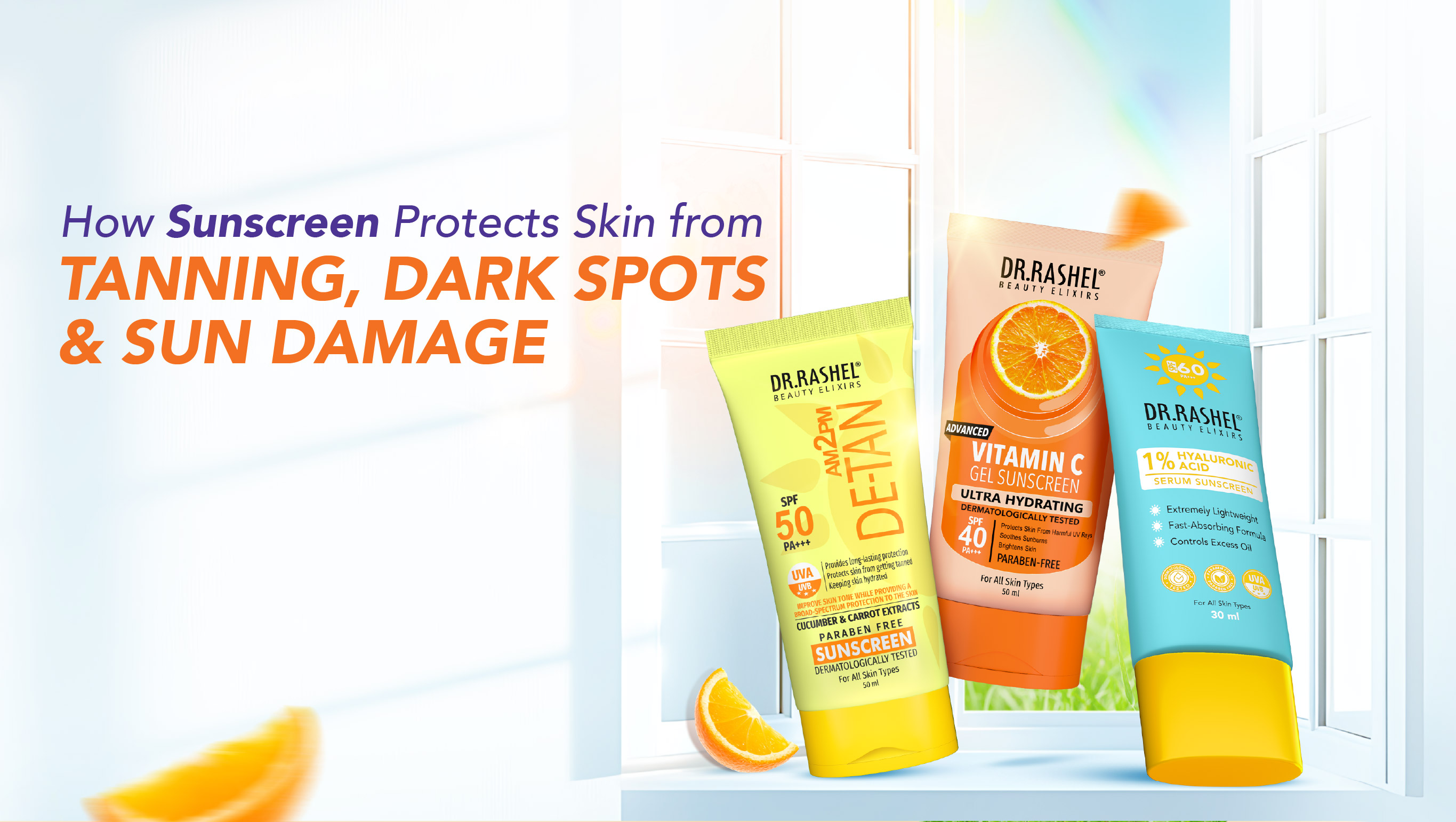
Sunscreen is often viewed as a beach-day essential, but its benefits go far beyond preventing sunburn. Many of you ask, “How to remove tan” or “Does sunscreen remove tan?” While it doesn’t eliminate an existing tan overnight. But regular use of sunscreen for tan prevention helps prevent further tanning, pigmentation, dark spots, premature aging, and long-term sun damage caused by harmful UV rays.
Using the right sunscreen for pigmentation and dark spots plays a crucial role in maintaining an even skin tone. Sunscreen helps prevent the worsening of dark spots and pigmentation, allowing the skin to stay healthier. In this blog, you will learn in detail exactly how sunscreen is found to be effective against tan, pigmentation, and dark spots.
The Science Behind Why Skin Tans
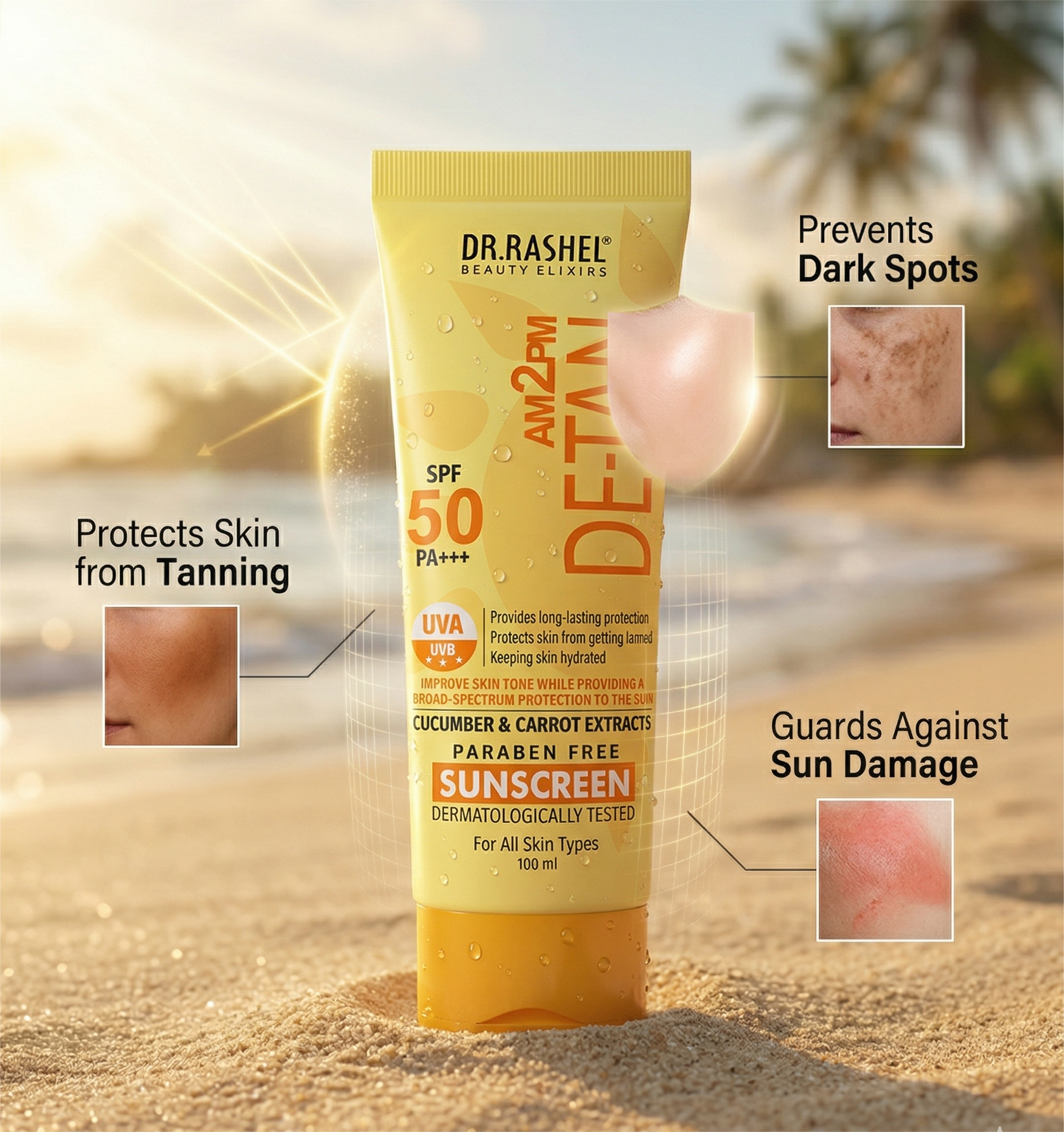
Let’s understand how your skin reacts when exposed to sunlight. When sunlight hits your skin, it triggers melanin production (a hormone responsible for skin color). An increase in melanin causes your skin to become tan or darker. This process is generally known as tanning. Actually, the tan is a sign of cellular damage caused by harmful UV rays.
Typically, sun rays emit ultraviolet (UV) radiation, mainly UVA and UVB rays, both of which affect the skin differently.
- UVA rays penetrate deep into the skin and are responsible for tanning, premature aging, wrinkles, and dark spots.
- UVB rays affect the skin’s surface and are the primary cause of sunburn and skin redness.
Without any kind of protection, these harsh rays slowly weaken your skin barrier and disrupt the natural repair system of your skin.
Sunscreen: How It Prevents Damage & How to Stop Tanning
Literally, sunscreen works like a smart filter for you. Instead of allowing UV rays to penetrate the skin, it deflects them from your skin. And ultimately, as you know, this prevents the melanin overproduction that causes tanning and hyperpigmentation.

Broad-spectrum sunscreens like those with SPF 30+ & PA ratings protect against both UVA and UVB rays, helping to:
- Prevents sun-induced tanning
- Prevent dark spots and uneven tone
- Protect collagen and skin elasticity
This is why dermatologists & skin experts call sunscreen the most effective anti-aging product you can use.
Sunscreen for Dark Spots & Pigmentation
Make sunscreen an ally to tackle the acne marks, melasma, or sun spots due to overexposure to sunlight. Sunscreen for dark spots or sunscreen for pigmentation is generally known to reduce the darkness and fade away the spots or pigmentation. Even the most powerful brightening serums won’t work effectively without sun protection, so always use sunscreen.
Daily use of sunscreen with SPF 30 or SPF 50 helps prevent existing dark spots from darkening and stops new ones from forming. With consistent use, this simple skincare routine can lead to noticeable improvements in skin tone over time.
Preventing Tan, Dark Spots & Sun Damage: From Different Skin Types
Every skin type behaves differently, so not all sunscreens work the same for everyone. Some may give excellent results, while others may have little effect. Understanding your skin’s unique needs is essential before selecting a sunscreen or any product, especially when it comes to preventing tan, dark spots, and sun damage.
Sunscreen for Dry Skin
Dry skin can feel tight, rough, or flaky and is prone to irritation. Hydrating sunscreens are considered to be the best for dry skin. Sunscreens for dry skin contain glycerin, hyaluronic acid, ceramides, or natural oils. Cream- or lotion-based formulas help lock in moisture while protecting the skin from UV damage, making them perfect to be called a sunscreen for tanning prevention and also for pigmentation and dryness.
Sunscreen for Oily Skin
Oily skin produces excess sebum, which can make sunscreen feel heavy or greasy. For oily skin, lightweight, oil-free, or gel-based sunscreens work best, while non-comedogenic sunscreens prevent clogged pores and breakouts. Sunscreens for oily skin containing niacinamide also help control excess oil while reducing the risk of tan, dark spots, and other sun damage.
Sunscreen for Combination Skin
Combination skin is oily in the T-zone (forehead, nose, & chin) and dry in the cheeks. A balancing sunscreen, hydrating enough for dry patches but lightweight for oily areas, is the best choice. Gel-cream or fluid formulations work well, and applying slightly more on dry areas ensures even coverage and protection, keeping the skin safe from tanning, pigmentation, and sun-induced damage.
Choosing the Right Sunscreen for Your Skin
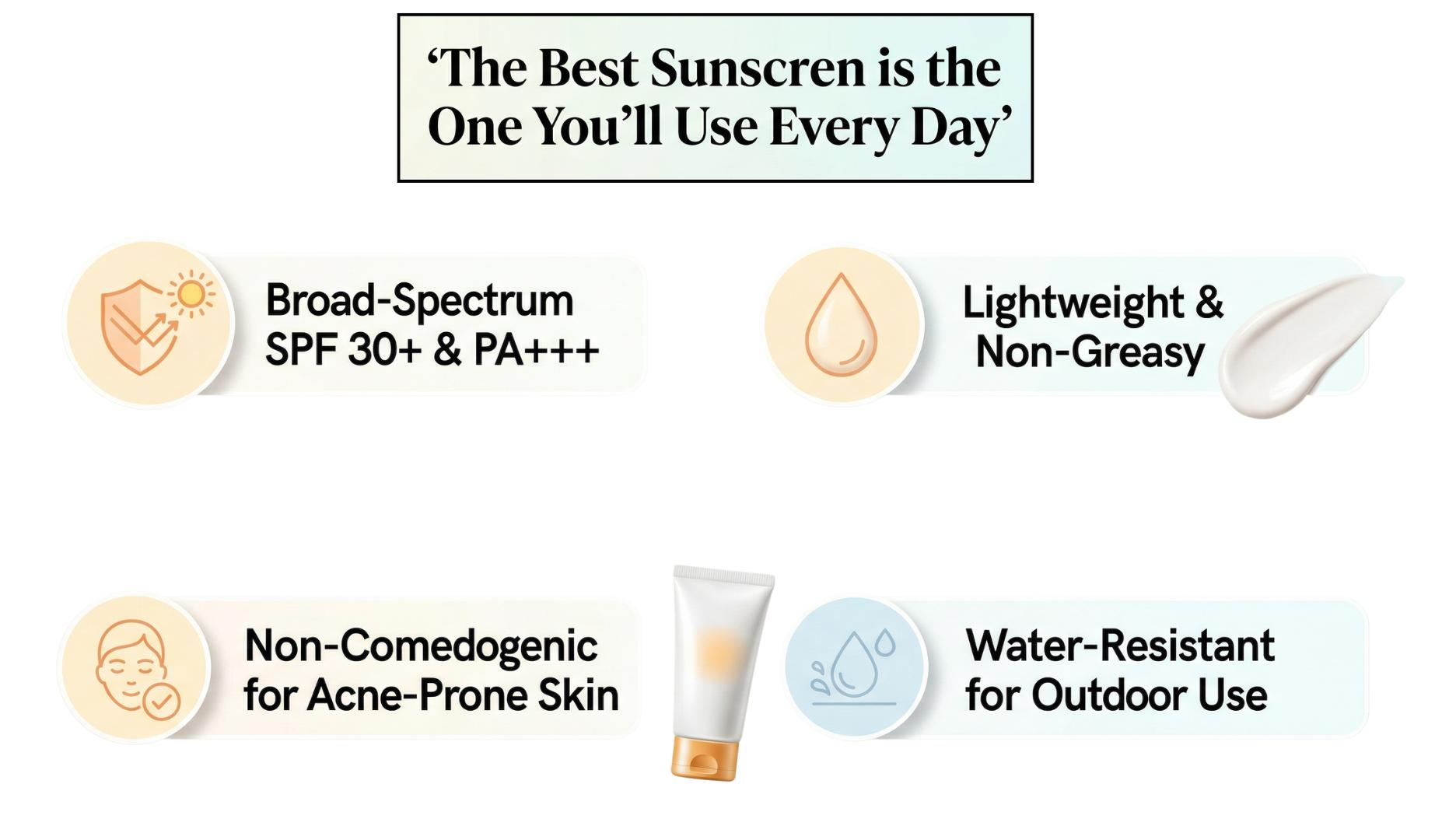
The best sunscreen is one you’ll use every day. Look for:
- Broad-spectrum protection (SPF 30+ & PA+++)
- Lightweight, non-greasy formulas
- Non-comedogenic options for acne-prone skin
- Water-resistant sunscreens for outdoor use
All the above qualities will be found in the Dr.Rashel sunscreen. Apply sunscreen as the final step of your morning skincare routine and reapply every few hours when exposed to sunlight or 15-20 min before going outside.
Takeaway Points to Prevent Tan
Sunscreen isn’t optional; it’s essential to have sun protection and create an invisible layer of shield. As we discussed, it protects your skin from tanning, dark spots, premature aging, and invisible sun damage that builds over time. Hence, many skin experts and Dr.Rashel Team suggest having sunscreen as part of your everyday habit.
FAQs—Sunscreen for Dark Spots & Pigmentation
How does sunscreen help with tanning prevention?
Sunscreen for tanning prevention blocks harmful UVA rays that trigger melanin overproduction, preventing unwanted darkening.
Why should I use sunscreen for sun protection?
Always remember sunscreen for sun protection can shield your skin from harmful UV rays, helping prevent sunburn, premature aging, and long-term damage.
Can sunscreen help reduce pigmentation?
Absolutely! Regular use of sunscreen for pigmentation prevents new dark spots from forming and protects existing pigmented areas from getting darker.
How does sunscreen prevent dark spots?
Typically, sunscreen for dark spots shields vulnerable skin from UV-induced hyperpigmentation, helping maintain a clearer complexion over time.
What role does sunscreen play in sun damage prevention?
Sun damage prevention starts with daily sunscreen, which protects against harmful UV rays that can cause wrinkles, fine lines, and sometimes DNA damage in skin cells.
Can sunscreen be used to maintain healthy, even-toned skin?
Absolutely—by combining sunscreen for pigmentation control, tanning prevention, and sun damage prevention, you keep your skin protected, radiant, and youthful.

