


Acne, whiteheads, and pimples are terms we use all the time when talking about skin, and you may even see them on your own face. Despite being common, many people still don't know the differences between them or how to remove whiteheads or acne effectively.
Acne is the most common skin condition, affecting about 9.4% of people worldwide. To prevent and treat acne, pimples, and whiteheads effectively, it’s essential to understand the differences between them, as each requires specific care.
In this blog, there is a clear and proper explanation of the differences, and it shares an effective skincare routine for acne-prone skin.

What Are Whiteheads?
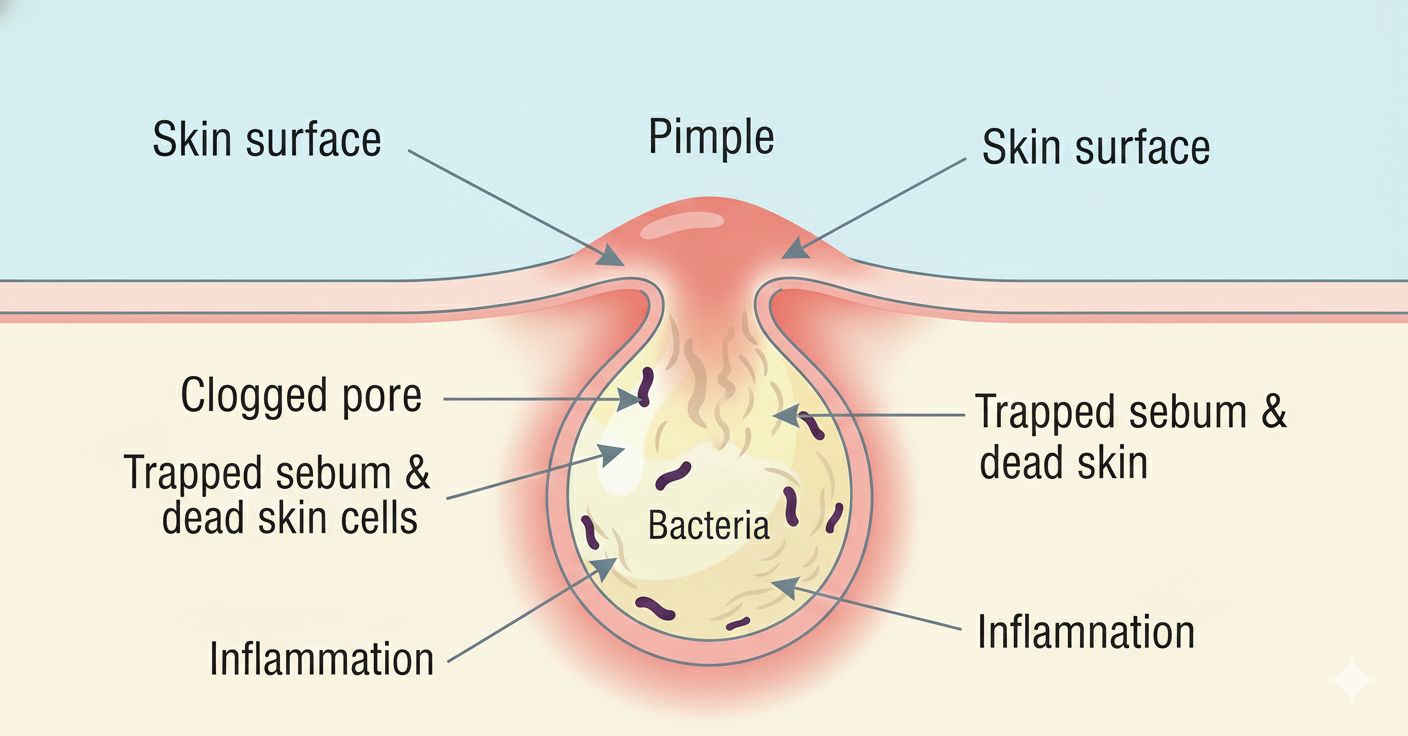
How does it pop up on your face? Whiteheads occur when pores are clogged with oil, dead skin cells, and bacteria. Because the pore remains shut, the trapped material appears as a small, white bump.
Whiteheads are a type of acne characterized by non-inflamed lesions that block hair follicle pores. They are less painful than pimples and commonly caused by hormonal fluctuations, excess oil, and comedogenic products.
How Do I Remove Whiteheads?
- Gentle cleansing twice daily with a non-comedogenic face wash.
- Use salicylic acid-based topical treatments to unclog pores.
Best Products for Nose Whitehead Removal
- Active: Charcoal Nose Strip
- Benefit: Removes whiteheads & blackheads, unclogs dirty pores, and reduces excess oil
What Are Pimples?
How do pimples look? Pimples appear red, swollen, and sometimes filled with pus, and they are inflamed, also sometime called as pimple pustules. Pimples form when clogged pores become infected with bacteria called Propionibacterium acnes, triggering inflammation. Unlike whiteheads, they are often more painful and may take longer to heal.
Learn How to Cure Pimples
- Spot treatment with tea tree oil to reduce bacteria.
- Use anti-inflammatory ingredients like 100% Neem to calm redness.
Best Products for Pimples
- Active: 100% Neem Extract + Salicylic Acid
- Benefit: Remove pimple, reduce acne, and unclog pores
What Is Acne?
“Acne” is a term that includes all types, from whiteheads and blackheads to pimples and more severe forms like cysts or nodules. What causes acne? It develops when hair follicles become blocked with oil and dead skin cells. It will worsen due to factors like hormonal changes, stress, diet, or genetics.
Mild acne mainly consists of clogged pores, while moderate to severe acne includes inflamed pimples and cysts that can leave scars if left untreated.
How to Get Rid of Acne?
- A consistent skincare routine targeting oil control, bacteria, and inflammation.
- Dermatologist-prescribed acne treatments for moderate to severe acne, including oral medications.
Choose The Best Products For Acne
- Active: 100% Neem Extract, Ubtan, & Salicylic Acid
- Benefits: Reduce acne, remove pimples, unclog pores, boost blood circulation, and remove tan
Quick Overview: Whiteheads vs Acne vs Pimples
Understanding subtle differences helps in choosing effective treatments:
- Whiteheads: Closed pores, small white bumps, non-inflamed.
- Blackheads: Open comedones; sebum oxidizes, turning dark; non-inflamed.
- Pimples: Inflamed red bumps, sometimes pus-filled (pustules).
|
Type |
Causes |
|
Whitehead |
Clogged pore
Small white bump caused by a clogged pore; typically not inflamed |
|
Blackhead |
Oxidized sebum
Dark-tipped lesion caused by oxidized sebum in an open pore; not inflamed |
|
Pimple |
Clogged pore + bacteria
Red, swollen lesion caused by a clogged pore with bacterial infection; inflamed |
. Show a cross-section of human skin with a clogged pore caused by trapped sebum and dead skin cells beneath the skin sur.png)

Understanding these differences helps prevent product misuse. For example, harsh scrubs may irritate pimples but can help clear whiteheads.
Home Remedies and Skincare Tips
- Avoid touching your face to reduce bacterial transfer.
- Keep pillowcases, towels, and hair clean to prevent pore blockage.
- Maintain a balanced diet rich in antioxidants and drink adequate water.
- Apply oil-free moisturizers and daily SPF to protect skin.
- Seek professional acne treatment from a dermatologist for persistent or severe acne to prevent scarring.
Conclusion
Whiteheads, blackheads, and pimples are all types of acne, but each looks and develops differently. Whiteheads are small, closed, and not inflamed; blackheads are open and dark due to oxidation; and pimples are red, inflamed, and often painful.
By understanding these differences and following a consistent skincare routine for acne-prone skin, you can manage breakouts effectively and reduce long-term skin damage.
What People Ask - Whiteheads
What causes acne, pimples, and whiteheads?
Acne, pimples, and whiteheads are caused by excess oil, clogged pores, dead skin cells, and bacteria. Hormones, stress, poor skincare, and diet can trigger recurring breakouts.
Does diet affect acne and pimples?
Yes. Foods high in sugar, dairy, and processed carbs may worsen acne and whiteheads, while a balanced diet supports clearer skin.
Is popping pimples or whiteheads safe?
No. Popping can cause infection, scarring, and dark spots. Use proper acne treatments instead.
When should I see a dermatologist for acne?
See a dermatologist if acne is persistent, painful, or causing scars. Professional treatment helps with severe or cystic acne.
How to get rid of blackheads at home?
If you are at home, you should use nose strips on clean, damp skin to gently remove blackheads & whiteheads. Use 1–2 times a week.
How to get rid of acne and prevent it from coming back?
To get rid of acne and prevent it from coming back, cleanse gently, use the right acne treatments consistently, maintain healthy habits, and most importantly, avoid touching pimples, because they can spread to other areas of skin.
Which ingredient has been newly discovered that can stop whiteheads before they form?
You will be excited to know that whiteheads can be tackled before they form. Recent studies suggest that Silybum marianum fruit extract (SMFE), from the milk thistle plant, acts on the mechanism and blocks the triggers that cause whiteheads. Real-world studies of 4,000+ patients showed success in over 84% of cases.


