


Table of Contents
Being excessively exposed to the sun on a daily basis can take a toll on your skin. We are in an era where skincare beats makeup, and natural, healthy skin is our ultimate goal. Protecting your skin is one of the most significant ways for healthy skin with the help of sunscreen.
Using a broad-spectrum SPF sunscreen ensures effective UV protection while preventing sunburn, premature aging, and dark spots. Incorporating daily sunscreen into your skincare routine is the simplest and most powerful way to maintain healthy, glowing skin every day.
Did you know UV rays can harm your skin?
Tanning
Tanning is caused by the multiplying levels of melanin in our skin. Melanin is a pigment that protects the skin from UV rays. Thus when you stand under the sun in queue of your long awaited concert for hours, melanin multiplies to try to minimize the harm on your skin.
Sunburn
The skin being the sensitive part of our bodies, poses a greater risk of getting sunburnt. When skin is exposed to the sun, red blood cells rush to the damaged skin causing the skin to get red and warm. Extreme sunburn brings in a higher risk of getting skin cancer.
Premature aging
With time, the skin changes its structure, becoming thinner and less protective. The sun’s harmful rays penetrate deeper in the skin and break down collagen, which is responsible for maintaining the skin’s elasticity.
Skin Cancer
Long years of UV rays exposure causes DNA damage in skin cells. Though a few are curable, they are very difficult to treat. There are various types of skin cancer including Melanoma, Squamous & basal cell carcinoma.
What is SPF in Sunscreen?
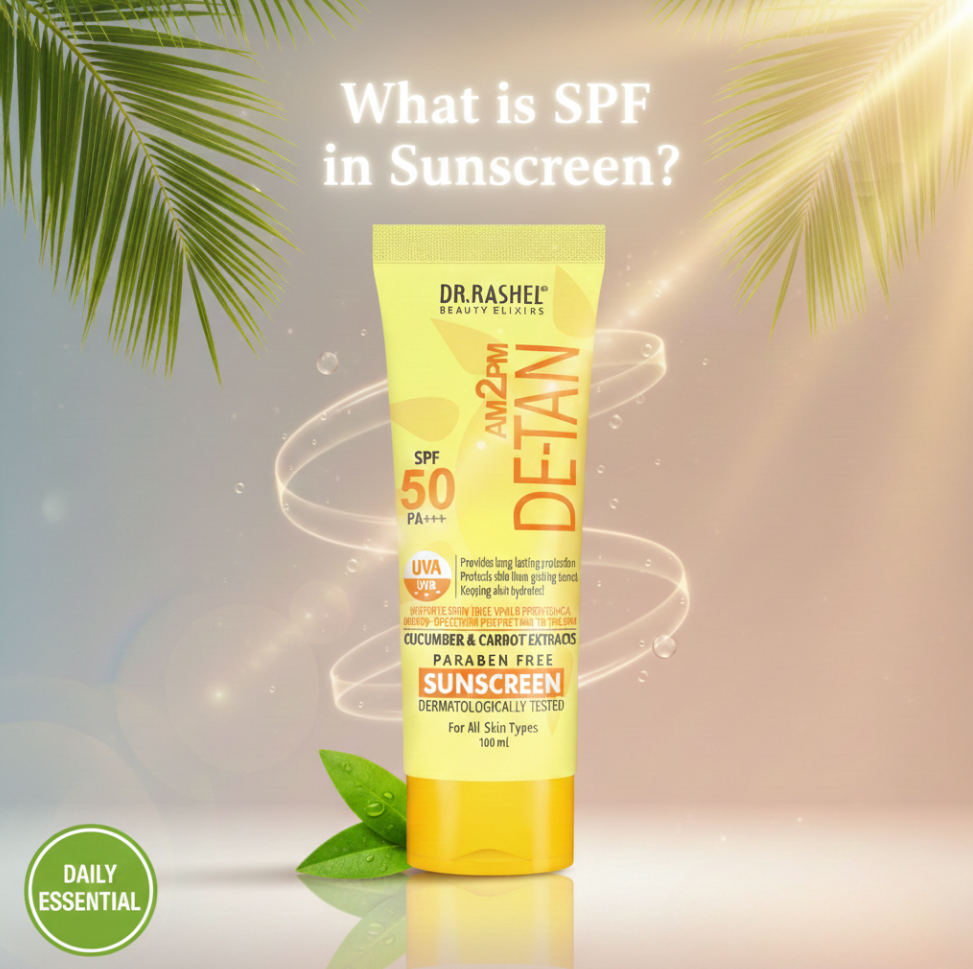
Sun Protection Factor (SPF) is like a shield for your skin. It is the measure on how well a sunscreen can protect your skin. The number of SPF tells you how long you can stay out in the sun before reapplying. The higher the SPF, the better the subscription you have of skin protection.
Here’s a breakdown of the different SPF numbers:
- SPF 15 - It protects your skin 15 times longer and breaks down 93% of UV rays.
- SPF 30 - It protects your skin 30 times longer and breaks down 96% of UV rays.
- SPF 50 - It protects your skin 50 times longer and breaks down 98% of UV rays.
- SPF 100 - It protects your skin 100 times longer and breaks down 99% of UV rays.
Choose Sunscreen Based on Skin Type

Wearing sunscreen is as important as carrying your earpods with you everyday. But how to find out which one suits you best?
For Dry Skin: If you are someone with dry skin, you can opt for hydrating and moisturizing sunscreens. Choose lotion-based products that will retain moisture in your skin. Ingredients to look for are hyaluronic acid glycerin, or ceramides.
For Oily Skin: If you have oily skin, you should opt for matte sunscreens that are oil-free and non-comedogenic. Water or gel-based formulations are lightweight and do not add extra shine.
For Sensitive Skin: If you have sensitive skin, you should go for fragrance and alcohol free sunscreens. Look for simple formulations with zinc oxide or titanium dioxide and avoid the ones with harsh chemicals.
For Normal Skin: If you are God’s favourite and have normal skin, your hunt for sunscreen is easy-peasy. You can choose sunscreens with broad-spectrum that protect against both UVA and UVB radiation.
What is Role of PA Ratings in Sunscreen?

The PA rating on sunscreen labels refers to “Protection Grade” of UVA rays. Similar to SPF, PA rating also determines how well your sunscreen will protect your skin. The more the plus “ + ” signs, the higher will be the protection. PA+++ sunscreens are great for everyday use and lower sun exposure conditions. A sunscreen with PA++++ provides a comprehensive protection from both UVA & UVB rays and are great for extended sun exposure.
In the end…
Sunscreens have become a very important part of your skincare. There are endless options of sunscreens available in the market to choose from. It is beneficial that you understand your skin type and what it needs before making any decisions.
No matter which sunscreen you use, these are the few things you should keep in mind:
- Use a broad spectrum sunscreen regularly
- Apply a generous amount of sunscreen 20 mins before sun exposure
- Follow sun-protection practices
- Remember to reapply sunscreen after 2 hours of being outside
FAQ’s
Is sunscreen good for skin?
Absolutely! Sunscreen is like a shield for your skin. It protects you from sunburn, wrinkles, dark spots, and also few researches say that it even reduces the risk of skin cancer. You should wear it every day, even on cloudy days.
Is it better to use SPF 30 or 50?
While it is better to use a higher SPF, SPF 30 and SPF 50 have a very small percentage of difference. An SPF 30 sunscreen allows you to stay in the sun without burning for approximately 300 minutes and with an SPF 50 sunscreen, you can stay in the sun for around 500 minutes without burning.
Difference between UVA and UVB rays?
UVA rays penetrate deep, causing aging and skin damage, while UVB rays affect the skin surface, causing sunburn and most skin cancers. Both require sunscreen UV protection.
Is SPF 50 enough for Indian skin?
It is recommended that Indians use a SPF 30 and higher sunscreen to protect the skin from sun damage. However, depending on the hot and humid climate of India you should opt for a sunscreen that is non-greasy, lightweight, and easy to use.
Does PA+++ prevent tanning?
Tanning is caused by UVA rays that enter your skin and stimulate the production of melanin. When your skin produces more melanin, it leads to tanning. Though sunscreens do not completely prevent tanning you can reduce its chances by using a PA++++ sunscreen that offers more UVA protection.
What are the disadvantages of high SPF?
High SPF sunscreens have a love-hate relation with your skin. Although they protect your skin they may contain more chemicals, which is not suitable for sensitive skin. Not all high SPF sunscreens protect against both UV rays so it's important to choose a broad-spectrum sunscreen regardless of the SPF.


