


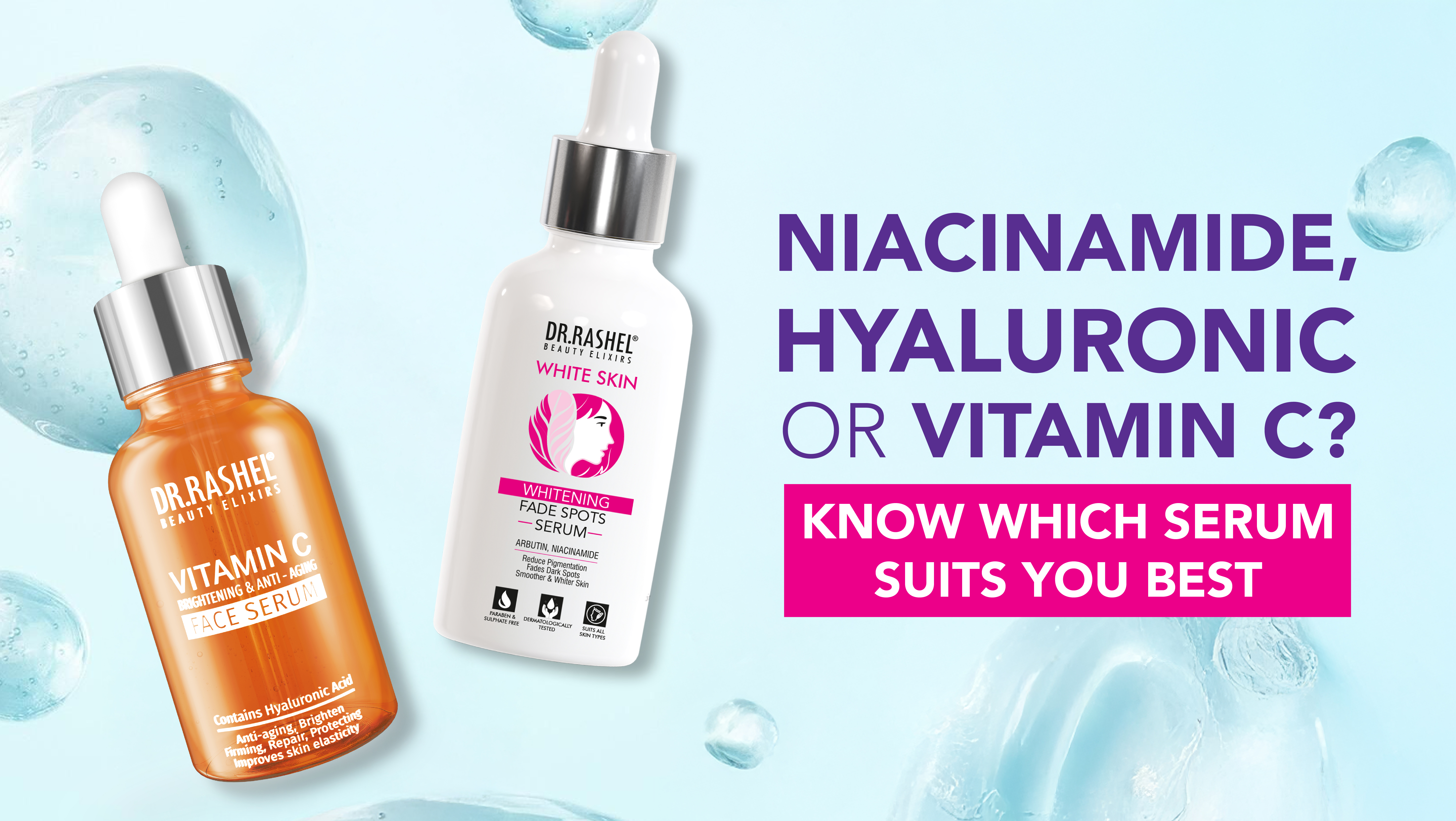
You may get the feeling, “kaise confusing word hai,” or a bit hard to pronounce. But DO YOU KNOW? These words blow the mind but raise the glowy shine.
Dermatologists often suggest serums with vitamin C, hyaluronic acid, and niacinamide. But you may have questions: Which serum is right for you? When should you apply it? Can you layer two at a time? And which one will deliver the best results for your skin?
In this blog, you’ll learn how serums with vitamin C, hyaluronic acid, and niacinamide work. And the benefits they offer. Keep reading to discover all the details!
What is Vitamin C Serum?
What does vitamin C mean?
It’s a powerful antioxidant that helps protect the skin from UV damage, boosts collagen production, and enhances brightness by reducing and minimizing pigmentation—ultimately helping it fade away completely.
This is especially beneficial for people struggling with hyperpigmentation and dark spots or for anyone looking to even out and improve their overall skin tone.
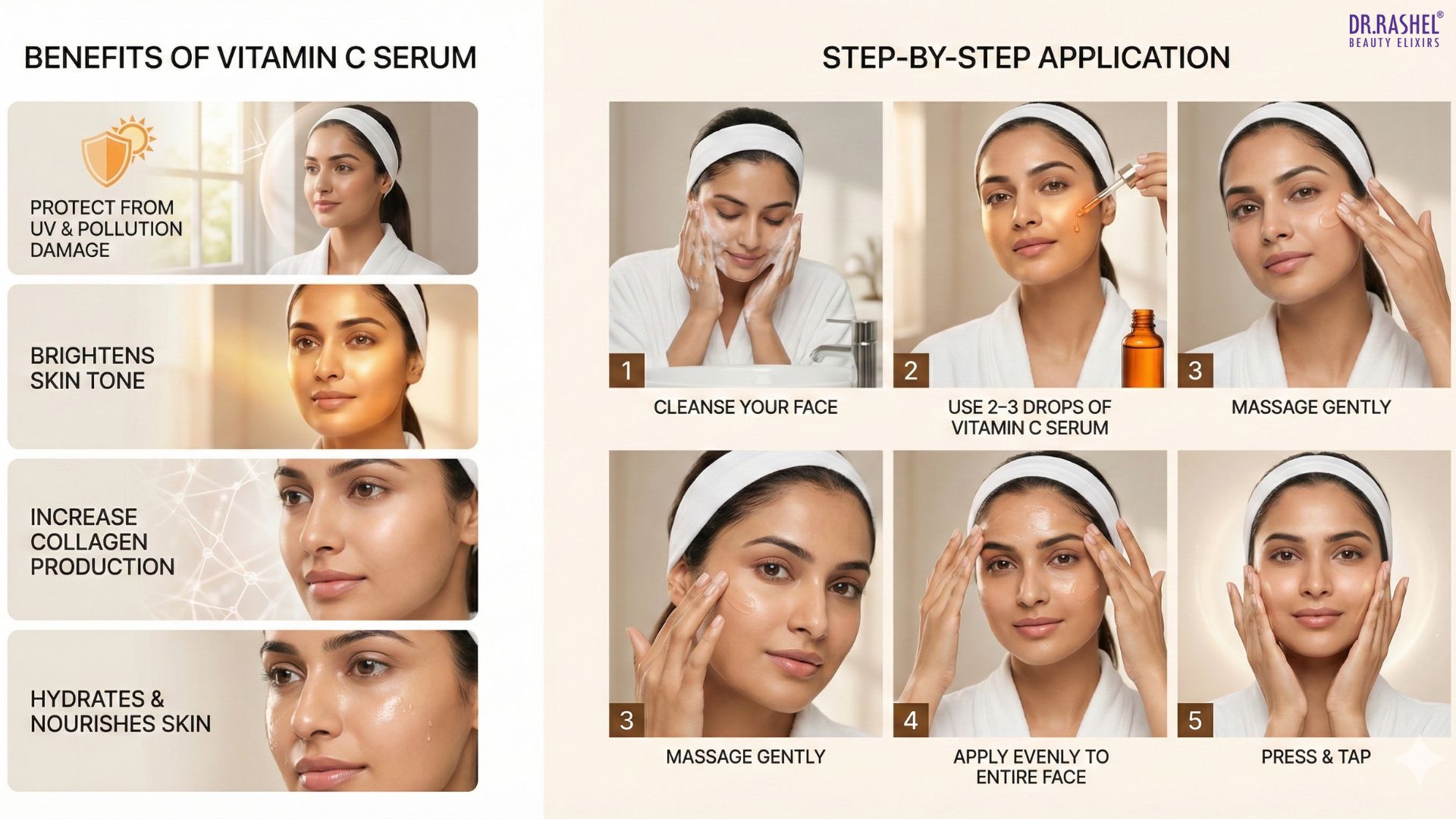
Benefits of Vitamin C Serum
- Protect from UV & Pollution Damage: The antioxidant qualities of vitamin C prohibit cell damage & pollution damage by combating & fighting with free radicals.
- Brightens Skin Tone: Controlled melanin synthesis, which will eventually reduce hyperpigmentation and dark spots.
- Increase Production of Collagen: Collagen is a protein that aids as well as helps in getting rid of wrinkles.
- Hydrates & Nourishes Skin: Vitamin C serums contain components that will hydrate, change the smooth texture of the skin, reduce dryness, and slightly fade away skin concerns.
- Redness & inflammation are reduced: Because of its anti-inflammatory qualities, vitamin C relieves slight irritations and itchy skin; beyond this, it can aid in reducing redness and treating acne or rosacea.
Niacinamide Serum: What is it?
What does niacinamide do for skin?
Niacinamide, sometimes known as nicotinamide, can deal with skin and its ailments. In chemical terms, it is a form of vitamin B3.
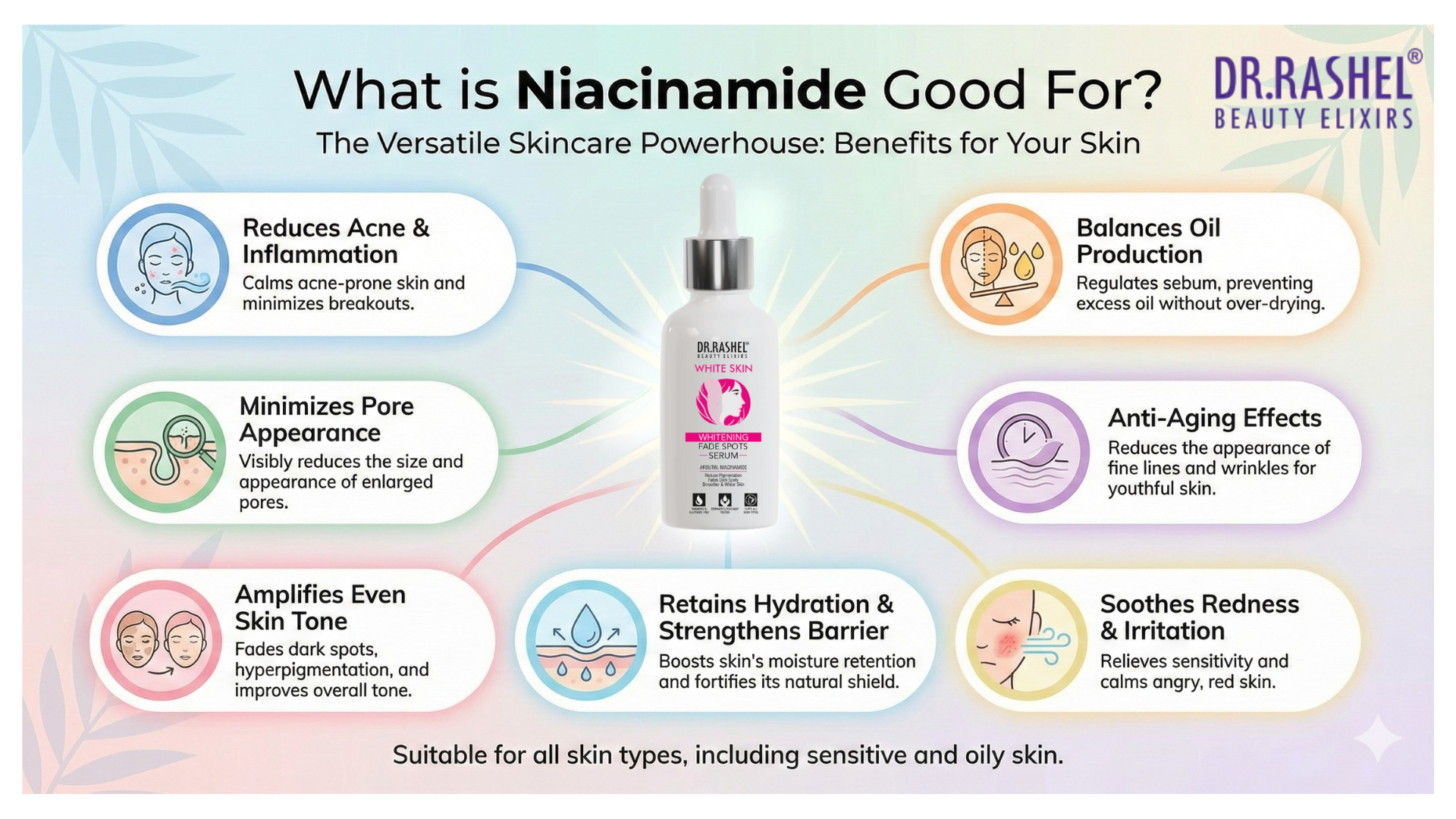
In skincare, niacinamide tackles acne, reduces pores, and brightens dull skin. With regular use, it helps reveal a smoother, more radiant, and glowing complexion.
What are the benefits of niacinamide?
- Reduces Acne: Aids in controlling excess oil. It also minimizes acne breakouts.
- Reduces Pore Size: Niacinamide enhances the skin texture, in a Gen-Z way, “skin looks,” and strengthens the enlarged pores.
- Amplifies Even Skin Tone: The most worthwhile niacinamide advantage is that it fades dark spots and evens skin tone naturally.
- Retains Hydration: The capability to enrich skin with moisture and prevent dryness or irritation.
- Soothes Redness: Calms inflammation and sensitivity, which will be slowly removed by niacinamide.
- Anti-Aging Mark Vanish: Really looks like he's in his 20s, smoothes fine lines, and enhances flexibility.
- Balances and Controls Oil Production: Niacinamide balances the oil's productivity. Hence, it ultimately does not give you any feeling of stickiness.
What is Hyaluronic Acid Serum?
Overview of Hyaluronic acid
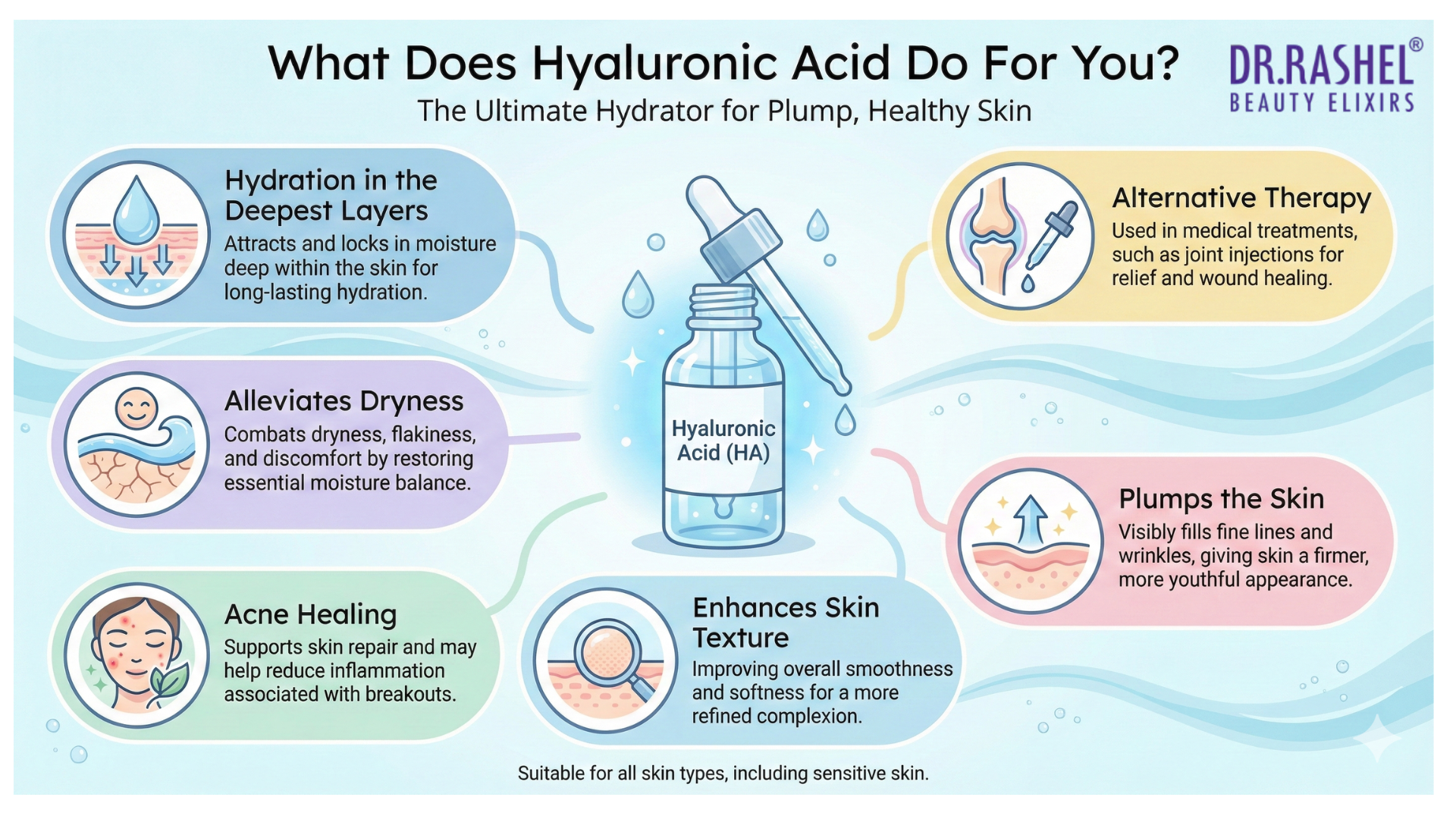
Hyaluronic acid (HA) is naturally found in the skin’s dermal layers, but your skin still benefits from an external source. Applied topically, HA deeply moisturizes, hydrates, and helps restore a youthful, plump appearance.
Hyaluronic acid helps maintain the skin’s smoothness, elasticity, and natural radiance.
What are the benefits of Hyaluronic acid?
- Hydration in the Deepest Side: It helps skin retain more water than its weight. This will make your skin plump & soft.
- Alleviates Dryness: Hydrates and soothes dry skin.
- Acne Healing: The wounds will begin to heal quickly. Scars from acne will heal quickly.
- Enhances the Texture of Skin: Enhances skin tone, making it smoother and more even.
- Plumps the Skin: Provides a youthful & fresh look. It minimizes fine wrinkles.
- Alternative Therapy: Hyaluronic acid injections deliver deep hydration, with effects that last for an extended period.
Niacinamide | Hyaluronic Acid | Vitamin C Serum: Compare Which One Is for Your Skin?
|
Feature |
Niacinamide Serum |
Hyaluronic Acid Serum |
Vitamin C Serum |
|
Main Function |
Balances oil, reduces acne & pores |
Deeply hydrates and plumps skin |
Brightens skin & fades dark spots |
|
Ideal For Skin Concerns |
Acne, increased pores, uneven texture |
Dryness, fine lines, tightness |
Pigmentation, dullness, aging |
|
Best For |
Oily, acne-prone, or sensitive skin |
Dry, dehydrated, or dull skin |
Dull, pigmented, or aging skin |
|
Key Benefits |
Controls sebum, strengthens barrier, minimizes redness |
Locks in moisture, improves elasticity, smooths texture |
Boosts collagen, evens tone, reduces fine lines |
|
When to Use |
Morning & night |
Morning & night |
Morning (always follow with sunscreen) |
|
Can Be Layered With |
Hyaluronic acid, moisturizers |
Niacinamide, Vitamin C, any serum |
Hyaluronic acid, sunscreen |
|
Visible Results In |
2–4 weeks |
Instant hydration, full results in 2 weeks |
3–6 weeks |
Dermatologist-Recommended Serums
Vitamin C Serum
Hyaluronic Acid Serum
Niacinamide Serum
Conclusion: Which Serum Is Best for You?
In summary, vitamin C serums brighten and protect the skin, niacinamide serums help reduce blemishes and improve texture, and hyaluronic acid serums provide deep hydration and plumpness.
The comparative table above makes it easy to choose the serum that’s best for your skin and addresses your specific concerns.
Choose wisely—it’s a matter of your skin
Understanding serums is one thing, but applying them correctly is key. Learn the proper way to use serum both in the morning and at night.
FAQs
Niacinamide, Hyaluronic Acid, or Vitamin C—which will be best for skin?
Ultimately, it depends on your skin’s needs. Hyaluronic acid deeply hydrates, vitamin C brightens and fades dark spots, and niacinamide balances oil, minimizes pores, and improves overall texture.
Which serum should be used first, either Niacinamide or Hyaluronic Acid?
According to dermatologists, start with hyaluronic acid serum to seal in hydration, then layer niacinamide serum to boost its effects and minimize pores for smoother skin.
Niacinamide, Hyaluronic Acid, or Vitamin C for oily skin?
Undoubtedly, niacinamide is one of the best serums for oily or acne-prone skin. It helps control excess oil, minimizes pores, and maintains balance without leaving a greasy feel.
How long should I wait before applying niacinamide after hyaluronic acid?
Simply wait 30–60 seconds after applying hyaluronic acid to let your skin absorb it and reveal its inner glow.
Can I use hyaluronic acid and niacinamide with vitamin C serum?
Yes, why not! Apply it in sequence: Vitamin C energizes and brightens, hyaluronic acid locks in hydration, and niacinamide finishes by calming and strengthening your skin barrier.
Which serum is best for clear and glowing skin?
Everyone wants glowing skin! Vitamin C serum provides a bright, radiant glow, while niacinamide smooths and refines your skin’s texture. Use this secret tip to get Korean-inspired skin.