


Table of Contents
- What is Acne?
- Types of Acne
- What is a Pimple?
- Causes of Acne & Pimples
- Treatment of Acne & Pimples
- Takeaway,
- FAQ’s
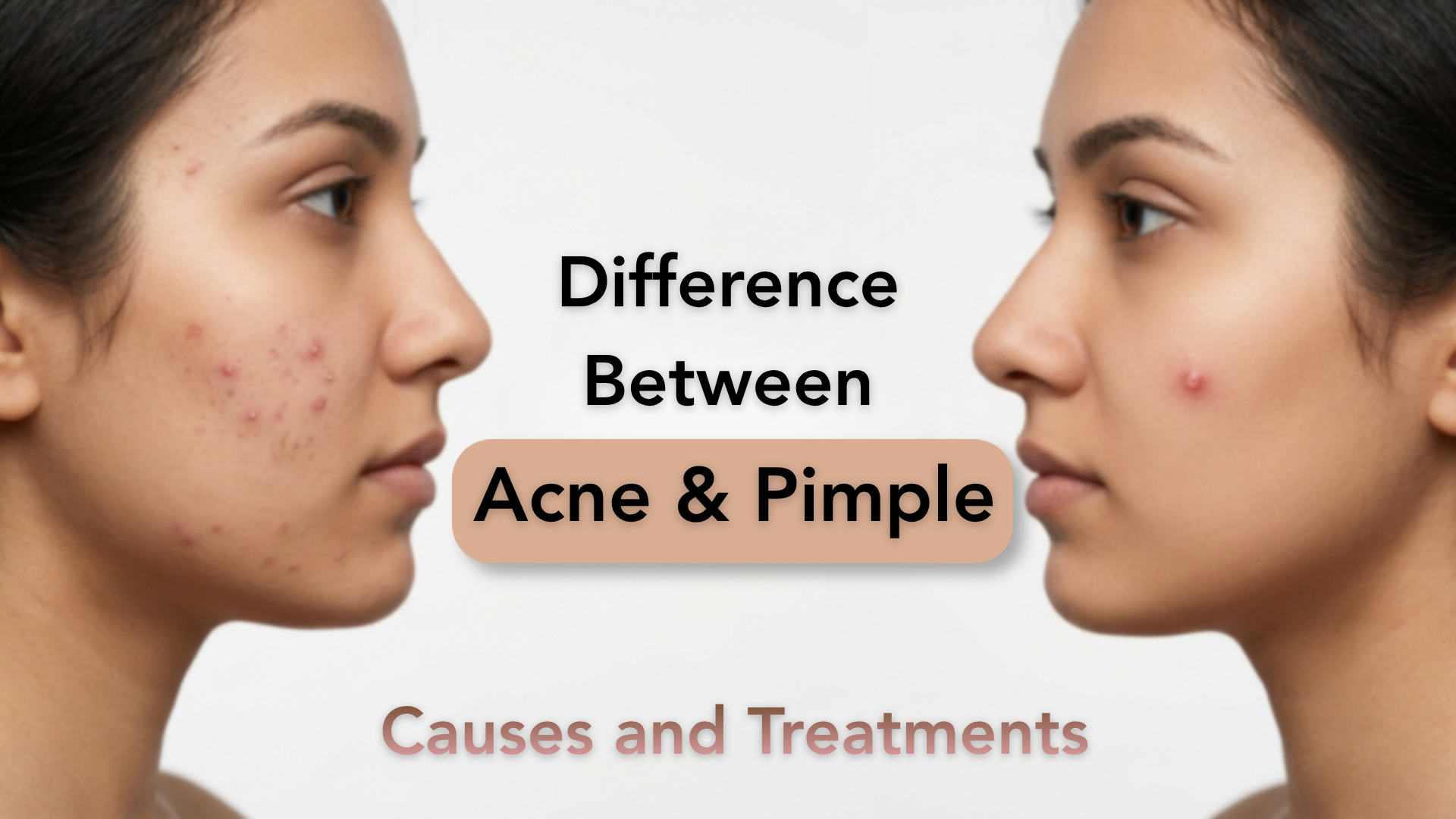
The image above provides a clear view of the acne and pimples. But still, many people think acne and pimples are the same. As you can see in the image that pimple is a single skin blemish, while acne is a skin condition that causes recurring breakouts.
So, it's important to understand the difference between acne and pimples and to treat them in the right way.
DR.Rashel's team presents a blog that will explain the acne vs. pimple difference, their common causes, and the most effective acne treatments to help you manage breakouts and achieve healthier skin.
What is Acne?
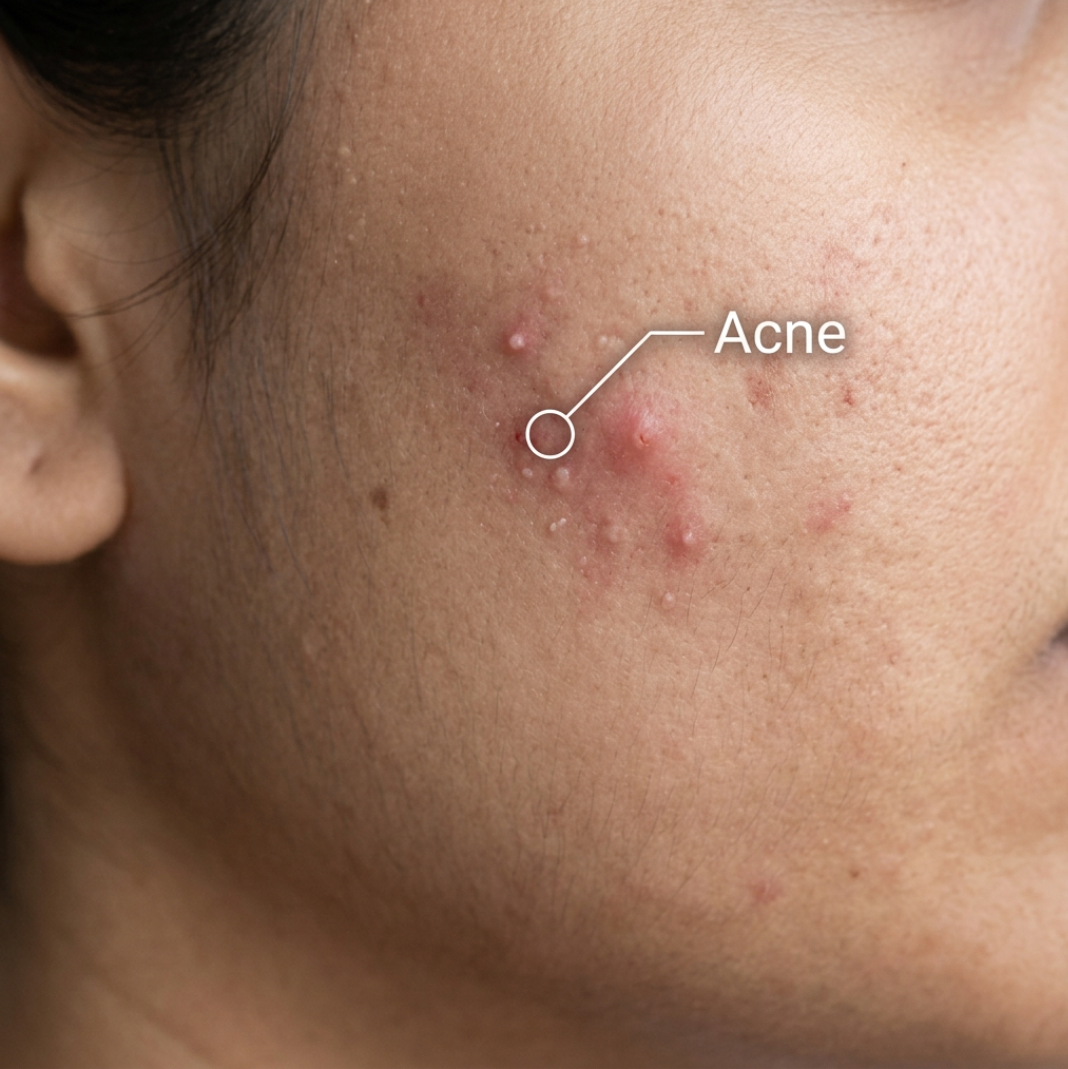
Acne is a skin disease that is caused by excess oil, sebum, or dead skin cells being clogged in the pores. We have pores in our skin, that is small openings that release sweat and oil. These pores are attached to hair follicles.
When oil, dead skin, and impurities get accumulated in the hair follicles, it can allow the growth of P. acnes, the bacteria responsible for causing acne. This leads to skin redness and inflammation.
Types of Acne
There are many different types or symptoms of acne that are distinguished on the basis of nature, appearance, and pain level:
Whiteheads
Whiteheads are clogged pores that remain as closed comedones and appear as small, white bumps on the skin. Though they are formed under the surface of the skin they do not pose any serious skin issues.
Blackheads
Blackheads are open clogged comedones that are exposed to the air which makes them appear in the form of black spots on the face. Blackheads appear on the surface of the skin and are a less serious form of acne.
Cysts
Cysts are caused by an infection in the hair follicles and appear as large red bumps that are filled with pus on the skin. Cysts are a severe form of acne under the surface of the skin and can be scarring.
Nodules
Nodules are similar to cysts, but they are firmer and are caused when clogged pores become inflamed. They appear as firm red bumps under the surface of the skin and can be painful to some extent.
Papules
Papules are small bumps on the skin caused by an inflammatory response to the walls of hair follicles breaking down. They appear under the skin's surface in the form of inflamed, tender, and red bumps.
Pustules
Pustules are papules but filled with pus, and they are a reaction to an infection or inflammation in clogged pores. Papules appear as red, inflamed bumps on the skin with a yellow pus-filled centre.
What is a Pimple?
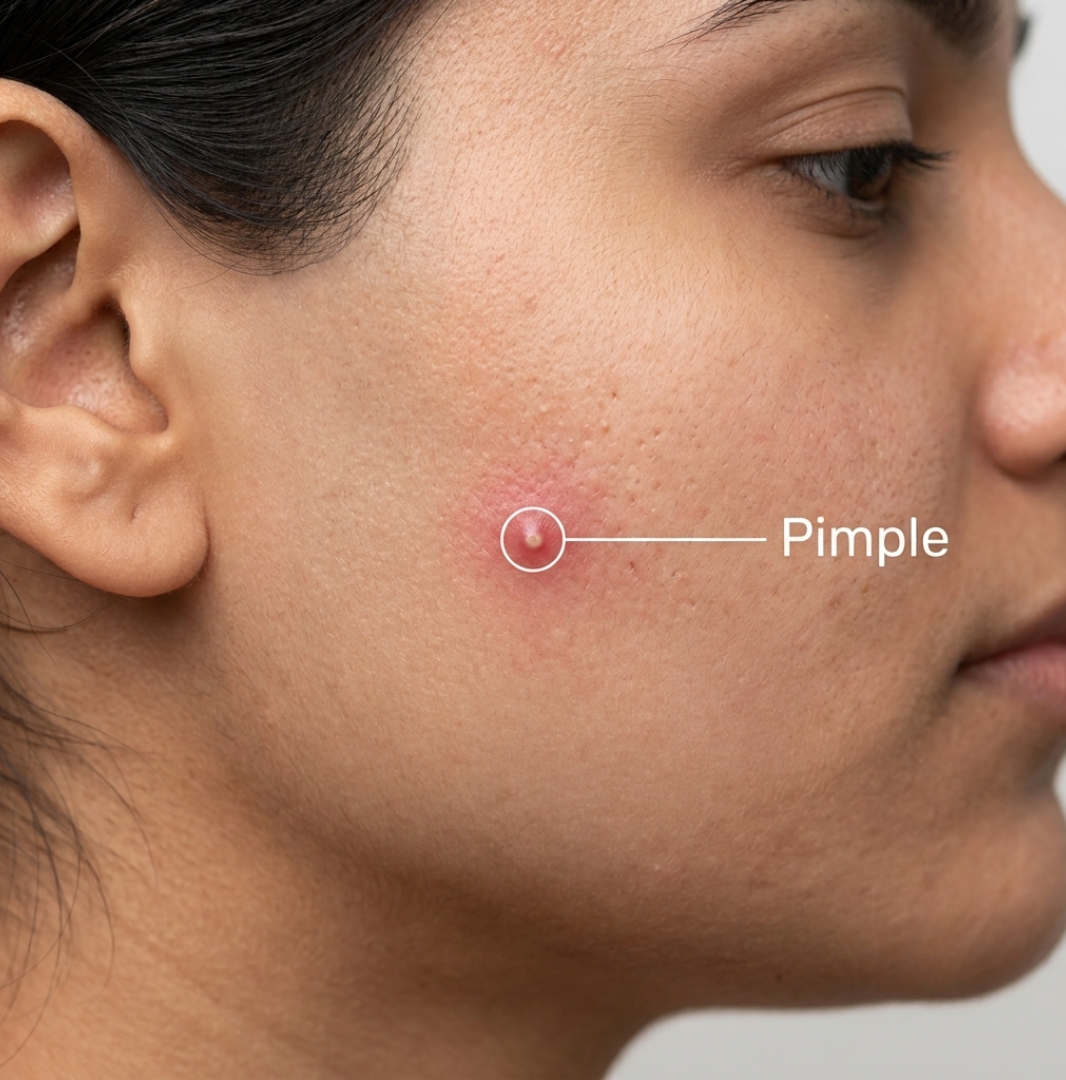
The difference between acne and pimples is that pimples are a symptom of the main disease that is acne. In other words, pimples are a part of and the starting point of active or serious acne. They are inflamed, red, and pus-filled lesions.
Pimples can affect teenagers and adults going through hormonal changes. Clogged pores or inflammation in the oil glands can cause pimples to form close to the surface of the skin. Every person has at least once in their life experienced a pimple, and it is not a thing of worry.
Causes of Acne & Pimples
Acne and pimples arise due to excess sebum production, accumulation of dead skin cells, and other trapped impurities. All these factors cause the pores to get clogged and favour the growth of bacteria.
Let's look at the other contributing factors of acne and pimples:
Changes In Hormones
When your body goes through fluctuations in hormones during puberty, pregnancy, or menstruation, there is an increase in sebum production, which makes your skin more prone to acne.
Not Following Proper Diet
Not just skincare but what you put in your body also matters and affects your appearance. Consuming certain foods with high sugar levels, dairy products, or processed foods can trigger the formation of acne.
Taking More Stress
Stress can also be a trigger for pimples or acne because when under high stress levels, your body releases the hormone cortisol, which is responsible for sebum production. Stress also causes lack of sleep and anxiety, which leads to clogged pores and acne.
Environmental Conditions
The weather and pollution of the city can cause the skin to get damaged or irritated or accumulate pollutants in the pores, which can lead to more sebum production and clogged pores.
Incorrect Skincare
Using products that are not suited or are harsh for your skin type can dry your skin out and contribute to acne. Not cleansing properly or over-cleansing can clog your pores. Also, picking at pimples and other lesions can worsen the condition.
Treatment of Acne & Pimples
Here’s a simple breakdown of how to cure pimples and acne:
Over the Counter Products
- Benzoyl Peroxide: Creams, gels, and cleansers formulated with benzoyl peroxide can help reduce clogged pores and acne-causing bacteria.
- Retinoids: Adapalene, a form of retinoid, helps unclog pores, reduce inflammation, and promote cell turnover.
- Salicylic Acid: Salicylic acid is a BHA that helps exfoliate the skin, prevent clogged pores, and reduce inflammation.
Skincare Products
- Cleansing: Keep your skin clean by washing your face twice daily with a gentle non-comedogenic cleanser.
- Moisturizer: Keep your skin hydrated to prevent compensatory oil production in the skin that can clog the pores.
- Makeup: Use oil-free makeup or avoid using makeup when experiencing a pimple or acne. Also make sure to properly remove makeup to avoid clogging pores.
Lifestyle Habits
- Eat Good: Avoid junk food and processed foods and eat more fruits, vegetables, and nutritious food items.
- Sleep Well: Get adequate sleep for about 8-9 hours, which is important to keep skin looking healthy.
- Manage Stress: Keep stress away by regularly exercising and meditating to keep the mind and body relaxed.
Final Thoughts
Understanding the basic acne and pimple difference can be crucial to opt for an effective treatment. Acne is a broader disease of various types, and pimples are a type of acne that appear in the form of pus-filled lesions.
So, now the next time you get a bump on your face (I really hope you do not), you won't be confused whether it's just a pimple or acne.
We hope DR.Rashel helps you understand acne and pimples better, so you can choose the right products for your skin. For severe breakouts, consult a dermatologist.
FAQ
Is acne the same as pimples?
Acne is a skin concern that causes breakouts on the skin while pimples are a form of breakout that appears red and inflamed.
How many pimples is considered acne?
Acne is diagnosed when there are frequent or severe breakouts. Multiple clustered pimples on the face or body is the norm for having acne.
Does acne hurt when touched?
Yes, cystic or inflamed acne can be painful when touched or applied pressure on. The pain arises from inflammation below the surface of the skin.
Is it OK to pop acne pimples?
No, it's not recommended to pop pimples as it can further push bacteria into the pores and worsen the condition. Popping pimples can also spread the infection to the other pores.
Written by Madiha Patel


