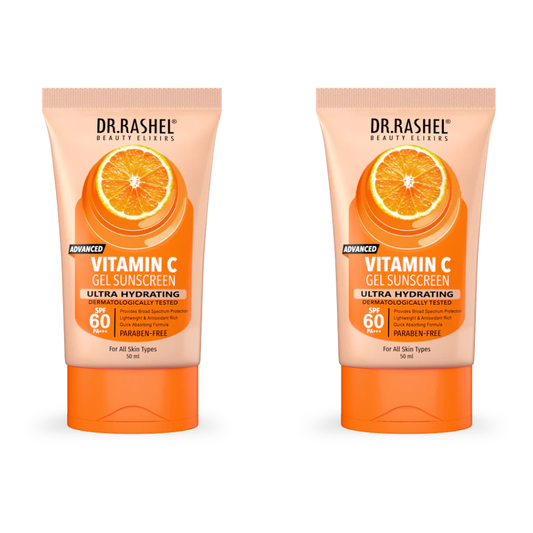
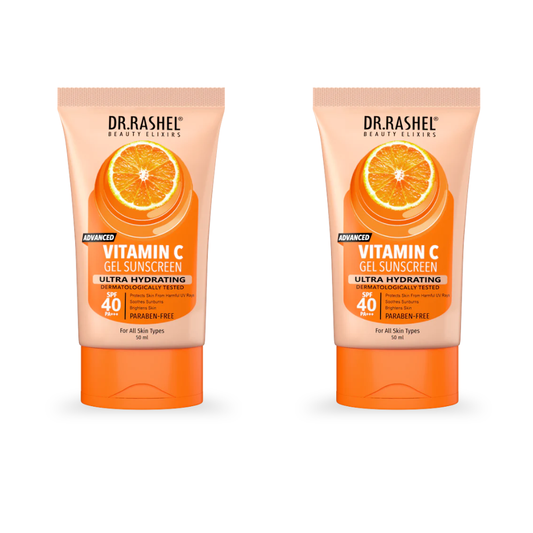
Shop Best Sunscreen for Oily Skin
Struggling with greasy sunscreen that clogs pores and leaves your oily skin feeling so heavy by midday? Finding the right sunscreen for oily skin is a bit challenging—but from now on it will not be anymore.
Dr. Rashel offers a lightweight, non-comedogenic sunscreen infused with natural ingredients such as Vitamin C, and also has UVA/UVB blockers such as zinc oxide, niacinamide, etc. to control excess oil, prevent breakouts, and keep your skin fresh all day. Enjoy oil-free sunscreen for face, breathable sun protection without the sticky feel—just smooth, matte skin that stays comfortable from morning to night.
How Oily Skin Occurs & How to Choose Sunscreen for Oily Skin?
Oily skin occurs when the sebaceous glands produce excess sebum, leading to a shiny complexion, particularly in the T-zone (forehead, nose, and chin). This overproduction of oil can trap dirt, dead skin cells, and bacteria, increasing the risk of acne, pimples, blackheads, and whiteheads. It can also clog pores, making them appear larger, and cause makeup to slide off or look patchy. Additionally, oily skin tends to be sensitive to heavy creams or rich products, which can worsen oiliness and trigger breakouts.
Choosing Sunscreen for Oily Skin
Oily skin needs sunscreen that protects the skin without adding extra oil. Here’s what to look in oil-free sunscreen for oily skin:
Choose the Right Sunscreen Formulation
For oily skin, sunscreen should protect without adding extra oil — otherwise it can feel greasy and worsen shine or breakouts. Gel‑based, water‑based, or fluid sunscreens are ideal because they are lightweight, absorb quickly, and don’t sit heavily on the skin. These textures help prevent a slick or sticky feel that many creams cause. Gel and water‑based formulations are often described by dermatologists as non‑greasy and refreshing, which is especially helpful for oily skin and also effective for acne-prone skin.
If you are truly looking for sunscreen for oily skin, then also look for “non‑comedogenic” or “oil‑free” labels — these sunscreens are specifically formulated not to clog pores or trigger acne, because sometimes in oily skin types, it is a key concern.
SPF and Broad‑Spectrum Protection
Always remember sunscreen for oily skin should offer SPF 30, 50, or higher to protect against UVA/UVB rays (which cause sunburn). For best skin protection, choose broad-spectrum sunscreens. These defend against UVA rays, which penetrate deeper and contribute to aging and pigmentation.
In markets like India with strong sun exposure, SPF levels should be above 30–50+ are your major requirement for daily sun defence.
Look for Oil‑Controlling Ingredients
Some sunscreens for oily skin include ingredients that help with oil regulation and skin calming:
- Niacinamide (vitamin B3) — helps soothe the skin, can regulate sebum production, and supports barrier function; many dermatologists favour it in products for oily and acne-prone skin.
- Zinc oxide — a physical blocker used in mineral sunscreens that also has mild anti-inflammatory and sebum-regulating effects. It’s often used in formulas for oily and sensitive skin because it provides broad-spectrum protection without a heavy feel.
These ingredients can make a sunscreen feel more breathable and compatible with oily skin while still protecting against UV damage.
Matte or Dry‑Touch Finish
Sunscreens labeled matte, ultra‑matte, dry‑touch, or oil‑control are formulated with light-reflecting and oil-absorbing elements (like silica) that help reduce shine throughout the day. This doesn’t mean they prevent oil completely — rather, they minimize that greasy look that many oily skin types dislike.
Dermatologists‑recommended gel sunscreen for oily skin & also for acne-prone skin often highlight a matte finish as a key benefit, helping makeup sit better and reducing the midday “oily glow.”
Ingredients and Textures to Avoid in Sunscreen for Oily Skin
Some sunscreen ingredients can exacerbate oiliness or irritation:
- Heavy natural oils like coconut or mineral oil, which can be comedogenic and clog pores.
- Fragrance and essential oils — these can irritate sensitive, acne-prone skin and increase redness.
- Alcohol — often found in mattifying products, but can over-dry skin and paradoxically trigger more sebum production.
Choosing gel sunscreen for oily skin without these helps keep pores clear and reduces the risk of breakouts.
Optional but Useful Features
- Tinted sunscreens: These offer light color coverage, helping even skin tone and reducing the need for heavy makeup. They can be a great option as sunscreen for oily skin as long as they’re oil-free and non-comedogenic.
- Water or sweat resistance: Particularly useful in hot or humid climates, this ensures the sunscreen stays effective even with sweat.
Decoding Sun Protection: SPF & PA Rating Sunscreen for Oily Skin
SPF for Oily Skin: Choosing the Right Sun Protection Factor
SPF measures how well your sunscreen protects against UVA/UVB rays, which cause sunburn and contribute to long-term skin damage. For oily skin, dermatologists recommend using SPF 30–50. SPF 30 blocks approximately 97% of UVB rays, while SPF 50 blocks about 98%. A higher SPF is often preferable for oily skin because it allows for a thin, lightweight application that provides adequate protection without adding extra greasiness.
For daily wear, dermatologists usually recommend using SPF 30+. Using SPF above 50 doesn’t dramatically increase protection, but it is helpful in hot or tropical climates where oily skin can sweat more.
PA Ratings for Oily Skin: Understanding UVA Protection
PA ratings indicate the level of protection a sunscreen provides against specifically UVA rays, which penetrate deeper into the skin and contribute to premature aging, pigmentation, and wrinkles. Dermatologists recommend lightweight sunscreens for oily skin with PA+++ or PA++++, as they provide high to very high UVA protection without the heaviness of thick creams, keeping the skin feeling light, breathable, and non-greasy.
Oily skin can become shiny if multiple thick layers are applied. Choosing high PA-rated sunscreens in a gel or fluid form ensures UVA protection without extra greasiness.
How SPF & PA Work Together for Oily Skin
SPF protects against UVB rays, while PA protects against UVA rays. For oily skin, the goal is to provide strong sun protection while minimizing shine and preventing clogged pores. Using an SPF 30–50, PA+++ gel or fluid sunscreen ensures broad-spectrum coverage without feeling heavy or greasy, making it ideal for daily wear on oily and acne-prone skin.
Benefits of Using Sunscreen for Oily Skin
Controls Sebum Production
People with oily skin are more prone to oily, shiny and greasy skin texture which leads to acne breakouts and hyperpigmentation. It makes my skin tired and dull. Sunscreen helps to reduce inflammation, clogged pores and greasy texture caused by extreme sunrays. Using a non-comedogenic sunscreen for oily skin helps in reducing inflammation and redness to protect from harmful sun rays. Ingredients like Vitamin C help to stimulate collagen production to promote radiant and healthy skin complexion.
Reduces Hyperpigmentation
Someone with oily skin experiences excess oil, shiny texture, dark spots, redness especially more if you’re exposed to UV Rays. Consistent use of gel based sunscreen for oily skin helps to regulate melanin production to control sun-induced discolouration and breakouts. Gentle ingredients such as vitamin E, aloe vera, hyaluronic acid and carrot repairs skin by fading acne marks, soothing breakouts and enhancing skin complexion.
Brightens & Hydrates Skin
It’s important for oily skin to hydrate for preventing acne breakouts, inflammation, shiny and dull complexion. A mineral sunscreen for oily skin consists of hydrating ingredients such as carrot, hyaluronic acid, aloe vera and ceramides restores moisture levels by skin breathable. It strengthens skin barrier by boosting collagen production to protect skin from UVA and UVB rays to keep skin hydrated without making it greasy.
Protects Skin
The prime work of sunscreen to protect the skin from UV Rays that leads to damaging skin, premature aging skin, uneven skin and hyperpigmentation. Sunscreen is rich with antioxidants that neutralizes free radicals. Always use a sunscreen spf 50 for oily skin for best results as it minimizes suntan, redness and dark patches to promote healthy skin tone.
How to Use a Sunscreen for Oily Skin
- Step 1: Use two-finger lengths of sunscreen, dot, and massage into your face.
- Step 2: Apply 5-10 minutes before stepping outside
- Step 3: Let it absorb completely.
- Step 4: Reapply every two hours for extra protection
Why to Choose Dr. Rashel Sunscreen for Oily Skin?
Dr. Rashel Sunscreen for Oily Skin have shown the best results if used in moderation and with consistency. We have carefully handcrafted our sunscreen for all skin types. Suitable for men and women, our oily skin sunscreen for women are made with the most effective ingredients according to the skin type and concern that are easy to incorporate in your skincare routine. Dr. Rashel Sunscreen is carefully customized and designed to tailor your beauty needs. Our Sunscreen for oily skin is free from harmful chemicals, parabens, and sulfates. Vegan and safe for consistent use.
Key Ingredients Used in Dr. Rashel Sunscreen for Oily Skin
Cucumber
Oily skin becomes shiny and greasy throughout the day, especially in hot and humid weather. Cucumber has soothing and anti-oxidant properties that soothes sunburn, redness and irritation caused by sun exposure. It prevents clogging pores by controlling sebum production
Aloe vera
Aloe vera is a lightweight and non-greasy ingredient making it suitable for oily skin. Prolonged sun exposure causes redness, inflamed skin and sensitivity to oily skin. Aloe vera contains alosin that fades dark patches, blemishes and aging spots. Sunscreens are rich with antioxidants that protect skin and repair damaged skin.
Vitamin C
Vitamin C is an oil balancing ingredient that keeps skin clean and clear. It prevents clogging pores leading to acne breakouts and hyperpigmentation. Using a matte sunscreen for oily skin with vitamin C helps heal inflamed skin and protect from sun exposure. Vitamin C evens skin tone and strengthens skin barrier to prevent getting skin damages.
Vitamin E
Vitamin E acts as a natural sunscreen booster that protects skin and prevents skin damages. The anti-inflammatory properties calms the sunburn, inflamed skin and sensitivity. A sunscreen with vitamin E boosts collagen production to improve skin elasticity. Vitamin E controls excess oil and prevents acne breakouts.
FAQ’s - Sunscreen for Oily Skin
Which sunscreen is best for oily skin?
The best sunscreen for oily skin is lightweight, oil-free, and non-comedogenic. Gel-based and matte-finish sunscreens help control shine, while mineral sunscreens with zinc oxide or titanium dioxide protect without clogging pores.
Can sunscreen remove oily skin?
Sunscreen doesn’t remove oily skin but helps control excess oil and shine.
Is vitamin c sunscreen for oily skin good?
Yes. It controls oil, brightens skin, prevents acne, and protects against UV damage.
How can I choose my sunscreen for oily skin?
Choose a sunscreen with zinc oxide or titanium dioxide for non-greasy protection. Niacinamide and Vitamin C help control oil and prevent acne, while hyaluronic acid hydrates without heaviness.
Is gel-based sunscreen good for oily skin?
Yes, gel-based sunscreen absorbs quickly, controls oil, and feels lightweight. It doesn’t clog pores, making it perfect for acne-prone skin.
Which sunscreen is less greasy?
Gel-based, matte-finish, and mineral sunscreens are the least greasy.
Which SPF is best for oily skin?
For oily skin, a sunscreen with SPF 30 and higher is suitable.
Related categories
Nose Strips | Lip Balm | Moisturizer | Cream | Scrub | Serum | Face Wash | Foaming Face Wash | Clay Stick Mask | Sunscreen | Sheet Mask | Wet wipes | Day Cream | Night Cream | Face Cream | Gel | Face Pack | Gel Scrub | Face Cleanser | Facial Kit | Facial Home Spa | Skin Series | Face Scrub